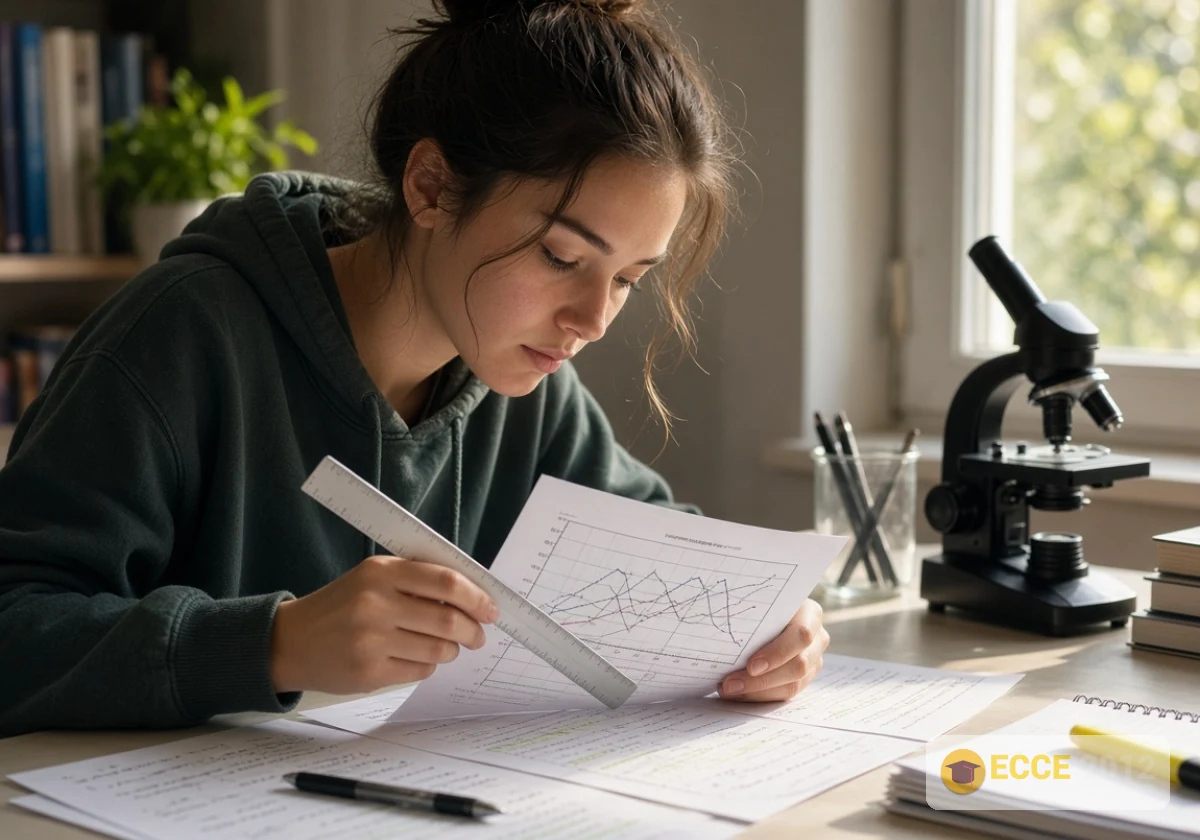
Students lose marks on maths questions they know how to solve because small process errors creep in between understanding the method and writing the final answer. A misread instruction or a dropped negative sign can cost as much as a topic you never revised.
That’s the frustrating part, because those marks sit well within reach. The good news is that careless mistakes follow predictable patterns, and here at ECCE 2012 we think patterns respond well to simple habits.
This guide covers the common maths exam mistakes that cost the most, why pressure makes them worse, and how pacing decides where marks disappear. You’ll also find practice habits that help you catch each slip before the examiner does. Read on to see which ones sound familiar.
Which Common Maths Exam Mistakes Cost Students the Most Marks?

These avoidable errors fall into five groups: misreading, calculation slips, wrong formulas, early rounding and missing working. Each has its own cause, so it needs its own check.
1. Misreading What the Question Asks Before You Start
Misreading a question often happens when you recognise a familiar topic and start solving it before checking what’s being asked. For example, you might calculate the area because that’s what you studied in class, even though the question asks for the perimeter. The two concepts are related, but using the wrong formula will still lead to an incorrect answer.
So before writing anything, take a few seconds to read the question in full. Underline the command word, such as “find” or “show that”, plus any units it names. And once you’ve completed the calculation, return to the question and check that your answer matches what it asks (this one check saves more marks than any trick).
2. Sign Slips and Other Calculation Errors in the Working
A minus sign can easily get lost when you rush through a calculation. Take the expansion of -3(x – 4), for instance. You might write -12 instead of 12. Since this changes the result, even a small sign error can make your final answer incorrect.
Writing each calculation step on a separate line can help prevent these mistakes. Instead of doing several steps in your head, show how you reach each value as you work through the problem. This makes it easier to follow your calculations and catch a sign error before it affects the rest of your answer.
3. The Wrong Formula Looks Right Until the Mark Scheme Arrives
Picking the wrong method or formula often feels right, like using 2πr for area when the question needs πr². Even perfect working after that scores nothing, because every step builds on the faulty start.
To prevent this, write the formula down in full before you substitute any numbers. Then check that its units make sense, since an area must come out in square units.
If two formulas seem to fit, check what the question gives you. A question that states the radius points to πr², while one that gives the diameter wants you to halve it first. Matching the given values to the formula’s variables confirms you have picked the right one.
4. Rounding Too Early and Losing the Final Answer Mark
Rounding a decimal too early can introduce small errors into your calculation. As you use that shortened value in later steps, the errors can build up and push your final answer outside the accepted range.
Keep the full calculator value, or store it in the memory, throughout the calculation to avoid this. Then, round only at the end, using the number of significant figures or decimal places specified in the question.
5. Skipping the Working and Losing Method Marks
Leaving out your working gives the examiner no steps to award method marks for. In GCSE maths, method marks are separate from accuracy marks, so you can still earn marks for using the correct method even if your final answer is wrong. However, the examiner must be able to follow how you reached your answer.
In other words, writing only an incorrect final answer without showing your working earns zero marks. Show your working for each substitution and step, even on two-mark questions that feel quick. Clear mathematical communication is how the examiner finds those marks.
How Pressure in Exams Makes Small Errors Cost Marks
These five mistakes become more common when the exam clock starts ticking. Under pressure, your attention narrows and makes you more likely to rush into a familiar method and skip checks you would normally make at home. This pressure can also affect your working memory, which makes it harder to hold numbers and information in your mind while solving a problem.
As a result, you might answer a question correctly in class but make mistakes with the same topic during an exam. Your knowledge hasn’t changed, but stress can make it harder to focus on small details and follow each step carefully.
Some questions are also more likely to trigger these mistakes, especially when you’re tired or short on time. Word problems, multi-step calculations and questions near the end of the paper often require extra attention. Recognising where you tend to make mistakes helps you focus your revision and practise those question types more carefully.
These slips tend to appear most often under pressure:
- Copying a number wrongly from the question onto your working
- Mixing up degrees and radians on your calculator
- Forgetting to include units in your final answers
- Answering only part of a multi-part question
- Skipping the last check because you feel rushed.
Go through your marked practice papers and tick which of these you made. That tally will show you which check to practise first, so you aren’t revising everything at once.

Time Pressure: Where the Marks Go When the Clock Runs Down
Once you know where pressure bites, the clock becomes the next thing to control. Poor pacing means you spend too long on one difficult question and rush the easier marks later.
Use the table below to see where time usually leaks and how to win it back.
| Time trap | What it costs you | What to do instead |
|---|---|---|
| Getting stuck on one hard question | Marks on easier questions you never reach | Move on after two minutes and come back later |
| Rushing the final pages | Careless errors on accessible marks | Aim for roughly one minute per mark |
| No time left to check | Slips stay on the paper | Save five minutes at the end for review |
Of the three rows, the minute-per-mark rule does the most work, because it ties your time to the mark allocation printed beside each question. Write the target finishing time beside each section of the paper before you begin.
Building Practice Habits That Help You Avoid Careless Mistakes in Maths
From here, the aim is to make good checks automatic before the real paper arrives. Regular practice under timed conditions builds those checks into habits, so they still happen when your mind feels crowded. If you want fewer slips on the day, have a look at the habits below:
- Timed Practice Each Week: Set a timer and complete one past paper section in the time the exam allows. Doing this shows you how the clock feels before it counts. Afterwards, note where you ran short and plan your pacing around it.
- An Error Log: Every mistake you make goes into a notebook with its type, the correct method and whether it came from a slip or a lack of understanding. After a few weeks, the log reveals which slip keeps returning (usually it’s the same one or two slips). Read it before each mock to remind yourself what to check.
- Checking Backwards: Substituting your answer back into the original equation tests it quickly. A wrong value fails straight away, and anyone who tutors algebra learns it catches sign slips faster than rereading. Make this your default step on algebra questions.
These techniques work best in short, frequent sessions. Each one gives you another chance to focus on why a slip happened rather than cramming everything into one sitting. So start with a single timed section this week and add the error log once you’ve marked it.

Start Collecting the Marks You Already Know How to Earn
Choose one of these habits to practise in your next mock paper. Once you get used to applying it, you can build on that progress by working on the other habits.
ECCE 2012 shares practical guidance for students who want to improve maths accuracy and exam technique. Contact us to find more advice on building calmer, more confident exam habits.