Group projects are some of the best training grounds for career skills for college students. The teamwork skills, communication skills, and accountability you build there are what employers expect from new graduates. Most students don’t connect the two until they’re sitting in their first job interview and scrambling for examples.
And yet, the examples were there all along.
Every time your group had to split tasks, resolve a disagreement, or present ideas under pressure, you were developing real employability skills (the kind that appear on every graduate job description in the UK right now).
This article walks you through what those skills are and why they count. You’ll also learn how to talk about them with confidence in any interview. Let’s get into it.
What Group Projects Teach You About Employability Skills
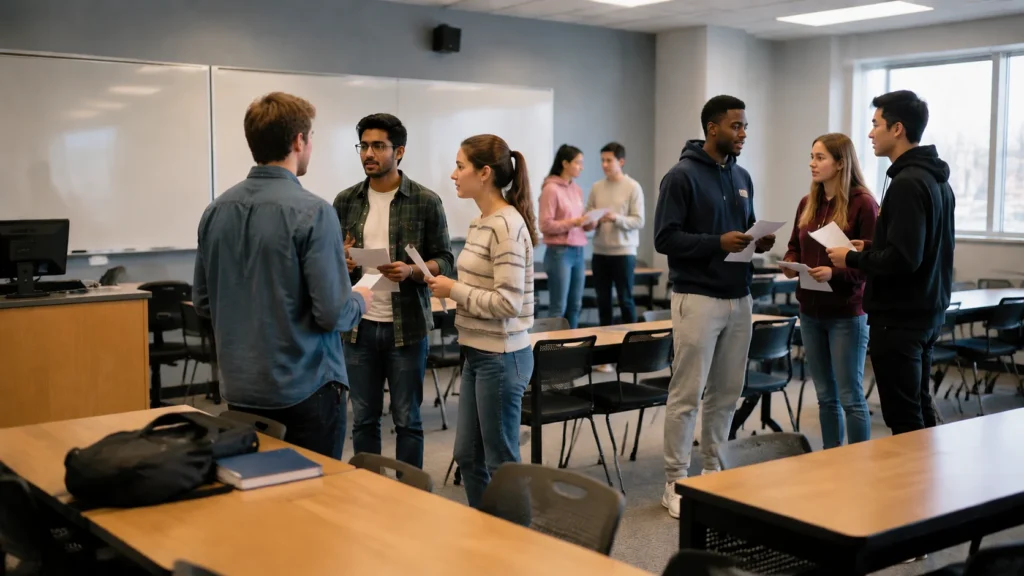
Group projects teach you employability skills the same way a job does, through deadlines, teamwork, and people you didn’t choose to work with. And yet, students rarely notice it until they’re already in the workforce.
Two areas in particular are worth paying attention to:
The Soft Skills You Practise Without Noticing
In a typical group project, you’re constantly reading the room, adjusting your approach, and finding common ground with people who see things differently. Those interactions build self-awareness in a way no lecture or solo assignment ever could. It’s one reason teamwork skills rank so highly in early career roles.
Think of it like a dress rehearsal. Nobody calls it practice, but that’s what it is (and yes, we’ve all met that teammate).
Why Employers Pay Attention to These Skills
Employers look beyond your degree. What they want is evidence that you can work with people, take initiative, and stay reliable when things get difficult.
According to Prospects, the skills employers look for in graduates include communication, teamwork, and self-awareness. The graduate job market reflects the same picture, with soft skills ranking among the most requested qualities across sectors in the UK.
Communication Skills and Presenting Ideas as a Team
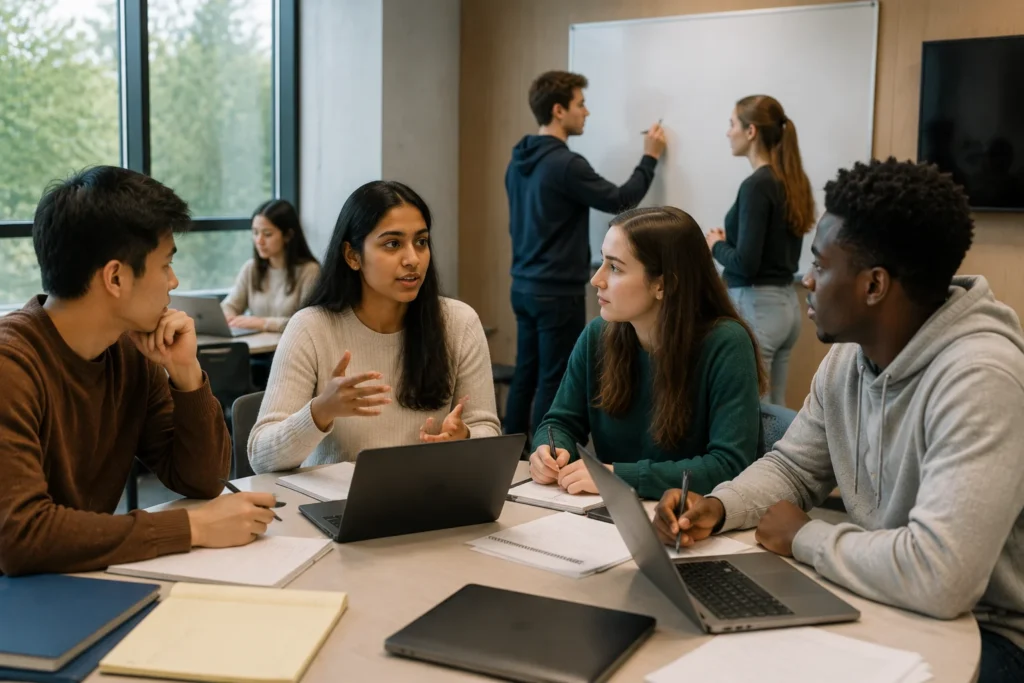
The best part about group projects is that they push you to develop communication skills you’ll use every day at work. And it goes further than simply talking to your teammates.
Good communication in a group setting covers written articulation, verbal delivery, and how you carry yourself in a room. Let’s break each one down.
- Written Communication: Group projects involve a surprising amount of written communication. Shared documents, update messages, and structured notes all build professional writing habits.
- Verbal Communication: When you present ideas to your group, you’re practising verbal communication skills under mild pressure. From what we’ve seen, students who regularly participate in group discussions adapt to professional presentations with much greater ease.
- Body Language and Style: Communication styles, body language, and facial expressions all influence how your message lands with others. Listening carefully to other viewpoints is part of effective communication too, and group settings give you repeated chances to develop it.
Once you’ve got these down, you’re already ahead of a lot of graduates walking into their first role.
Conflict Resolution and Keeping a Positive Attitude
A lot of students are surprised to find that group projects are one of the best places to develop conflict resolution skills.
Let’s be real, disagreements are a normal part of teamwork, and how you handle them tells employers a great deal about who you are professionally. A small argument left alone is like a crack in your phone screen. It doesn’t fix itself (some of those conflicts run deep).
For example, when someone misses a deadline or dismisses an idea, tension rises quickly. Students who learn to address those moments calmly walk into professional settings with something genuinely useful.
A positive attitude during a conflict means you offer constructive feedback, listen to different viewpoints, and keep the team focused even when things get personal. Employers notice that.
In most jobs, composure under pressure is a quality that gets noticed and rewarded.
Decision Making, Problem Solving, and Delegation
A lot goes into running a group project well. Decision-making, problem-solving, and delegation all come into play, often within the same week. And every time you work through one of those situations, you’re building skills that translate directly into the workplace.
Take a look at how each one develops in a real group setting.
Reaching Decisions as a Group
If you’ve ever been the person who finally got your group to agree on something, you know how much effort that takes.
Decision-making in a group setting is rarely tidy, and working through it builds problem-solving skills you’ll use in any team. Employers rarely say it outright, but reaching decisions under pressure is high on their list.
Delegation and Dividing Responsibility
Delegation sounds simple until you’re the one deciding who does what. You have to read each person’s strengths, assign tasks accordingly, and follow up without micromanaging. That’s delegation, and it’s one of the skills employers rarely expect from a fresh graduate but are always glad to find.
Accountability and Meeting Deadlines as a Team Player
Accountability is rarely the first thing students think to mention in an interview. And yet, it’s one of the qualities graduate employers reference time and time again.
Take a look at how the two compare.
|
In Your Group Project |
In Your First Job |
|
Submitting your section on time |
Meeting project deadlines |
|
Telling your group when you’re stuck |
Flagging issues to your manager |
|
Picking up slack when a teammate struggles |
Supporting colleagues under pressure |
|
Owning a mistake in the group |
Taking responsibility at work |
Working closely with graduate employers has shown us that reliability isn’t rewarded with praise. It’s simply expected, and the absence of it is noticed immediately.
Group projects prepare you for that expectation in a very direct way. When one person misses a deadline, other members lose the ability to move forward (the whole team feels it).
According to research into how firms develop new graduates, many graduates leave their first employer within two years. The ones who stay tend to be those who demonstrate reliability and ownership early on.
Talking About Your Career Skills for College Students

Now that you know which skills you’ve been building, the next step is learning how to talk about them in an interview. Students rarely use group project experiences as interview examples, and interviewers genuinely want to hear them.
A lot of us have sat in an interview and gone completely blank when asked for a real example. Your group project can be that example. When an interviewer asks for a time you worked under pressure or handled a disagreement, you already have a specific, relevant answer ready.
Pair it with a clear description of your role, the challenge, and the outcome. Graduates who walk in with that level of preparation are the ones employers remember.
If you want to present your employability skills more confidently, build on your soft skills with guidance built around graduate career readiness.
Time to Put These Skills to Work
By the time you finish a degree, you’ve resolved disagreements, met shared deadlines, presented ideas under pressure, and kept a team moving through difficult moments. Those aren’t small things.
This article walked you through employability skills, conflict resolution, decision-making, and delegation. Each one connects directly to what employers assess in the first few months of any graduate role.
At ECCE 2012, our team will take you through every step you need to present your college experience as a career-ready profile. The students who articulate these skills early are the ones who land roles with confidence.
Start building that edge today.