
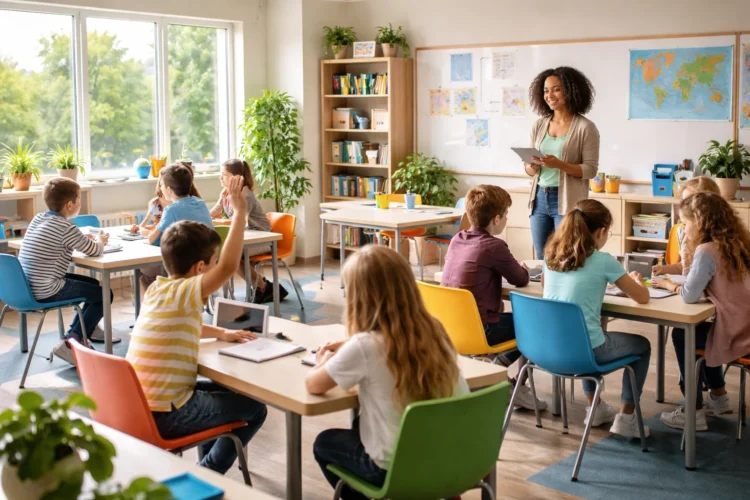
Many schools focus heavily on students and their individual needs, and rightly so. But in the effort to personalise lessons and track progress, it’s easy to miss the wood for the trees when it comes to the learning environment itself. Where learning happens, and how safe students feel in those spaces, shapes confidence, participation, and long-term results.
Sounds like too much work? Not really. Small, intentional changes to classroom layout, teaching habits, or even a child’s study space at home often have the biggest impact.
In this article, we’ll walk you through the key elements that make learning environments work, from classroom design to emotional safety. By the end, you’ll have practical steps you can apply straight away. First off, let’s clarify what a learning environment actually includes.
What Makes a Learning Environment?
A learning environment includes the physical space, social interactions, and emotional atmosphere that surround students during their education. The physical environment covers everything you can see and touch: the layout, lighting, seating, and resources available to students and teachers.
The social environment involves how students interact with their peers and instructors, building relationships and participating in discussions. Then there’s the psychological environment, which focuses on whether learners feel safe enough to ask questions, make mistakes, and take on new challenges.
These three work together, and when one’s missing, students tend to feel it. An inviting space that balances all three creates the conditions where children can focus, engage with course materials, and develop both academically and personally. Even in higher education, these same principles apply.
Physical Spaces: How Layout Shapes Student Achievements
Think about the last time you tried concentrating in a cramped, noisy space. Didn’t work well, right? Your students face the same struggle daily, which is why classroom design affects both engagement and results. Let’s look at two main areas where physical setup shapes learning.
Classroom Design That Supports Focus
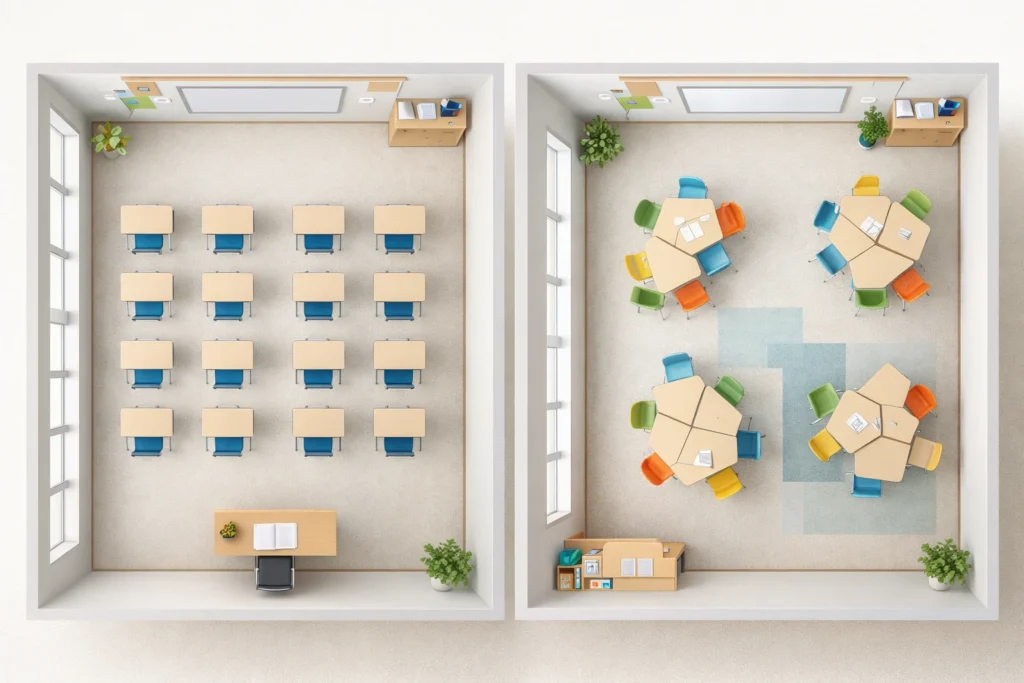
Desk arrangements influence how students interact and where they direct their attention during lessons. Rows work well for instructor-led teaching, while clusters encourage group work and peer learning. Flexible arrangements let you match the space to the task.
Visual clutter pulls attention away from what you’re teaching. Research from Beijing Institute of Technology and Beijing Normal University shows that excess visual distractions reduce focus on key information. Clear sightlines toward instruction help learners stay engaged with what you’re presenting.
Lighting and Seating Arrangements
Natural light supports alertness and positive mood better than artificial lighting, which some students find tiring over long periods. Comfortable seating at an appropriate desk height keeps learners engaged with content rather than physical discomfort.
This becomes especially important during longer classes or exam periods when students need sustained focus. Room temperature plays a role too, particularly during sweltering summer terms. When the environment supports them physically, they have more energy for learning.
The Psychology Behind Effective Teaching Spaces
When you create spaces where students feel trusted and respected, participation jumps, and questions flow more freely. The psychological environment is just as important as the physical one. Here are three ways you can build that foundation through effective teaching:
- Build Trust Through Openness: Admit that you’re not perfect and don’t have all the answers. This helps you connect with students and makes them feel safer asking questions and sharing ideas. Learning becomes about exploration, not perfection.
- Create Dialogue, Not Lectures: Speak to your students like you’re having a conversation and not delivering a speech. Slip in casual questions about what they think or where they’re confused, and when they respond, keep the conversation going. Back-and-forth like this helps you understand what students actually grasp versus what they’re struggling with.
- Make Mistakes Part of the Process: When mistakes feel acceptable in your classroom, students build resilience and see errors as natural steps in learning. Children who know they won’t be judged harshly engage more deeply with challenging material and develop real confidence.
You don’t need extra resources or special training to create this kind of environment. Consistency, empathy, and genuine relationships go a long way.
Emotional Safety and Its Impact on Student Progress

If you’ve ever felt too anxious to raise your hand in class, you already understand why emotional safety influences learning. School can feel overwhelming at any age, and students who feel emotionally supported tend to make better progress than those who don’t.
Predictable routines reduce anxiety and help students feel secure enough to engage with new material. When children know what to expect each day, they spend less mental energy worrying about what comes next and more on learning itself.
You can also celebrate small achievements along the way. Maybe a student improved their quiz score or contributed more during group discussions. These moments of recognition build self-esteem and encourage learners to take on more challenging tasks over time.
Building a Positive Learning Environment at Home
Your responsibilities as a teacher go beyond the classroom. If you have students who prefer or need to study at home, you can help them build effective learning spaces. To support their own learning outside school, share these three strategies with students and their families:
- Create a Dedicated Study Space: A dedicated space helps children stay focused and signals that learning time is important. It doesn’t have to be a full home office. A corner with good lighting, comfortable seating, and easy access to course materials is enough.
- Collaborate With Families: Share upcoming lesson plans and course materials with parents so they can reinforce classroom learning. Regular conversations help catch learning gaps early. When a student struggles with a concept, you and their family can work together on strategies that bridge classroom and home study.
- Make Homework Engaging: Small creative touches can make studying less of a chore. Parents can use background music during reading, timed challenges for maths practice, or even scents like peppermint to aid memory during revision. These simple strategies help students approach home study more positively.
The connection between the classroom and home creates a positive learning environment that supports student progress across both spaces.
Simple Classroom Adjustments Teachers Can Implement Today
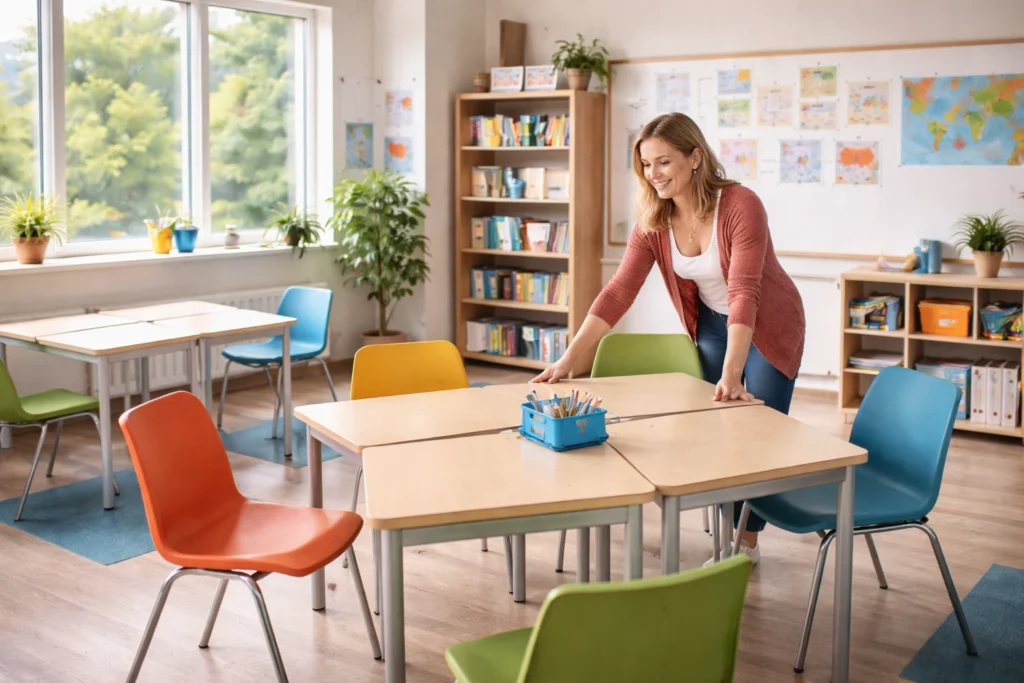
You don’t need a budget or a full redesign to make your classroom a better place for learning. Small tweaks like rearranging desks or inviting student input can improve learning outcomes without major expense. And no, you don’t need approval from three committees to try these. Let’s see how this works in practice:
- Rearrange Your Classroom Layout: Try moving desks into semicircles or small clusters instead of traditional rows. This promotes peer interaction and makes every student visible during lessons. Different arrangements work for different teaching styles, so experiment until you find what helps your students engage best.
- Invite Student Input: Ask your students to contribute artwork, suggest classroom rules, or share ideas for improving the space. When children help shape their learning environment, they develop a stronger connection to it and participate more actively in class.
- Adapt Your Teaching Methods: Some learners grasp concepts through hands-on practice, while others need visual examples or step-by-step explanations. Depending on what you observe, vary your approach to ensure all students can access the material. This kind of effective teaching creates learning experiences that work for your whole student population.
Most of these changes settle into place within a week or two, and students often respond positively once they adjust to the new setup.
Where You Can Go From Here
Learning environments shape how confident students feel and the results they achieve. From the physical setup of your classroom to the psychological safety you create through effective teaching, each element supports student learning in measurable ways.
The good news? You don’t need major changes to see positive outcomes. Start with one or two adjustments that feel manageable, whether that’s rearranging your classroom layout, celebrating small achievements more regularly, or opening up more dialogue with your students and their families.
For more practical strategies on education and teaching, visit ecce2012.org. We share insights to help teachers create classrooms that support and engage students.